Background
Many adults face significant challenges when searching for rental housing, encountering a process that is often characterized by redundancy, excessive time consumption, stress, and sometimes, unexpected expenses. The existing rental application procedures contribute to a cumbersome experience, hindering individuals from efficiently securing suitable housing options.
The Bounce application was conceptualized as a solution to the prevalent issues in the rental application process. Recognizing the need for a more streamlined and user-friendly approach, Bounce was designed to simplify and expedite the housing rental application journey.
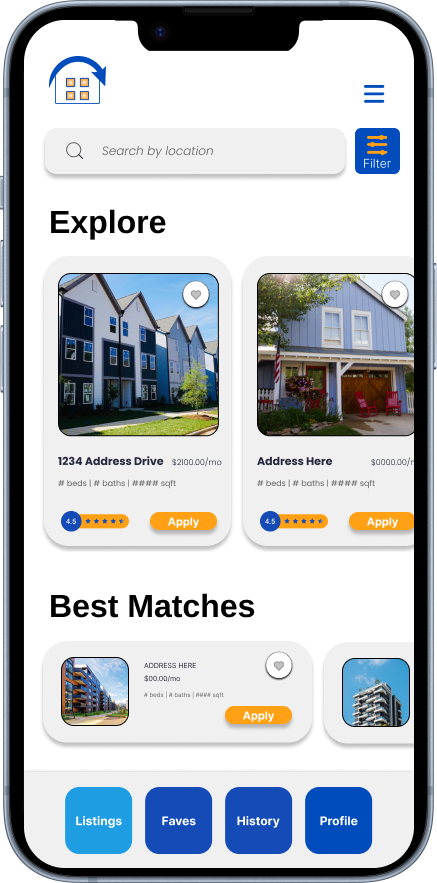
Explore page in Bounce
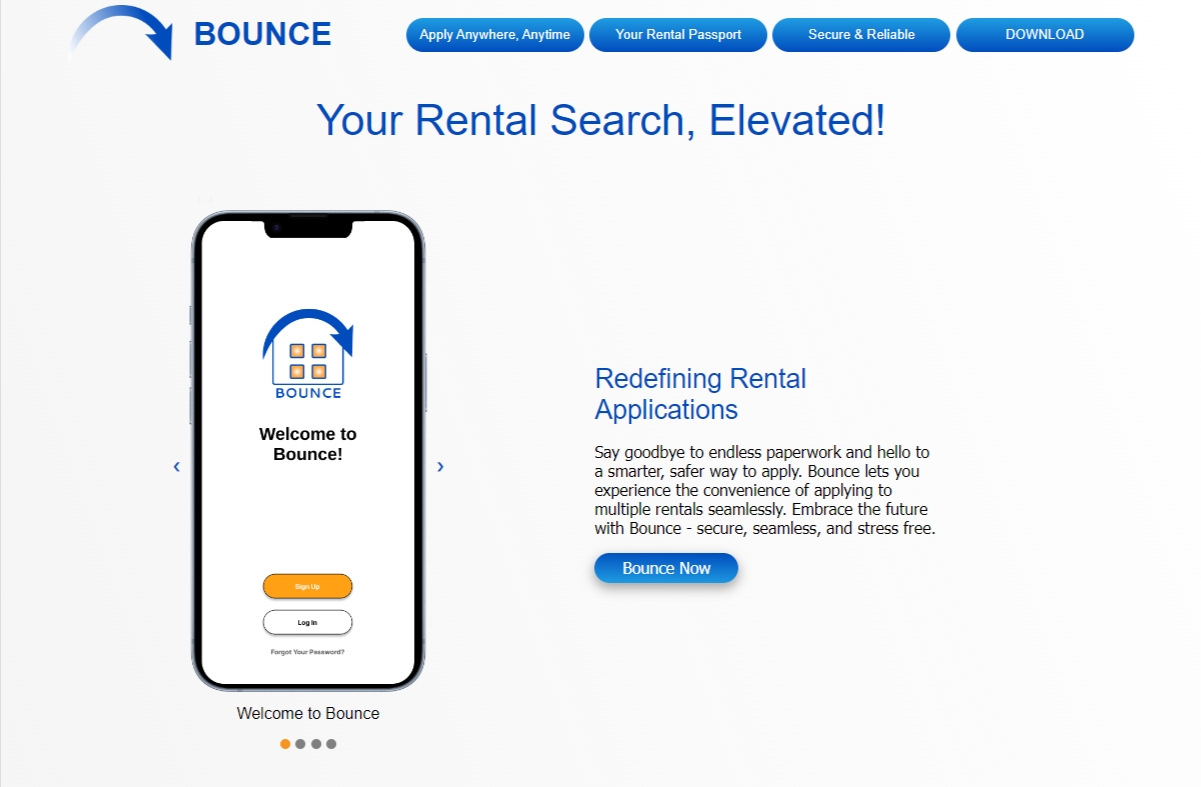
In my role, I led the frontend development of Bounce's marketing webpage using HTML, CSS, and JavaScript, employing Visual Studio Code, Google Inspect tool, and Github for an efficient workflow. Focused on a responsive design, the webpage ensures an optimal user experience across devices. With a user-centric approach, I employed a single page design for simple navigation, and prioritized clear communication of the Bounce application's features.
Technology Stack & Development Environment
For the crafting of the marketing webpage, I utilized a dynamic set of tools and languages. HTML formed the backbone, ensuring a structurally sound and semantically rich foundation. CSS, with its styling prowess, brought life to the interface, ensuring a visually appealing and cohesive user experience. JavaScript injected interactivity with a slideshow showcasing the application's interface. Finally, I use CSS Media Query to make the webpage responsive and user-friendly.
In the creation process, I took advantage the capabilities of Visual Studio Code, a powerful and versatile code editor that streamlined the development workflow. The Google Inspect tool was employed meticulously to refine, de-bug, and optimize the webpage's visual elements, ensuring an optimal user interface.
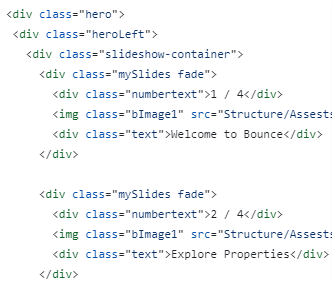
Example of HTML code from document
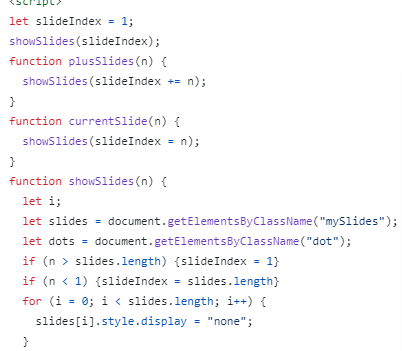
Example of JavaScript code from document
Responsive Design
Recognizing the importance of a responsive design in today's diverse device landscape, I implemented techniques to ensure that the marketing webpage adapts gracefully to varying screen sizes. This mobile-first approach guarantees an optimal user experience whether accessed from a desktop, tablet, or smartphone.

I employed CSS Media Query to create breakpoints for responsiveness
Responsive design is paramount for the Bounce application's target audience, ensuring a seamless and accessible experience for individuals navigating the housing rental landscape. As many users within this demographic rely heavily on mobile devices for their daily interactions, a responsive design ensures that the Bounce marketing webpage adapts effortlessly to various screen sizes and resolutions.
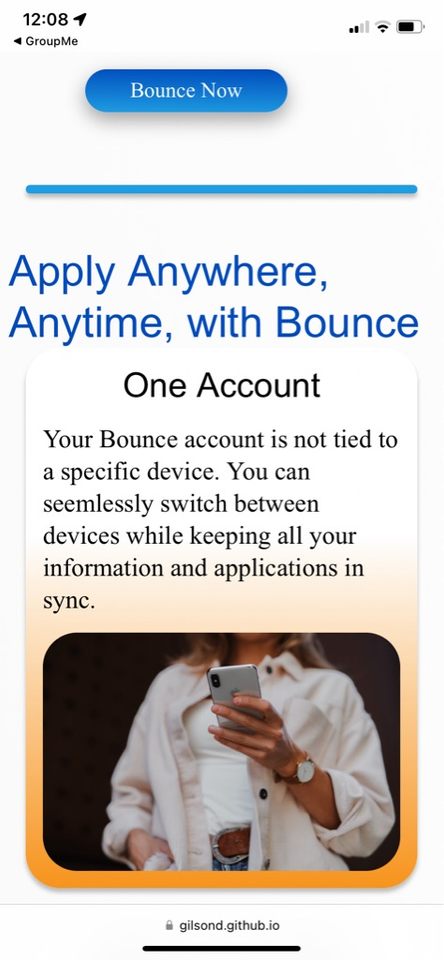
Webpage viewed on Iphone XR
Conclusion and Reflections
In conclusion, the design and development of the Bounce marketing webpage have been a transformative journey, pushing the boundaries of my skills and expanding my proficiency in frontend development.The strategic use of CSS media queries for responsive design has been particularly enlightening, as it allowed me to cater to the diverse device landscape of our target audience effectively. The application of responsive design principles, especially through media queries, has been a game-changer, ensuring that the Bounce webpage seamlessly adapts to varying screen sizes, offering an optimal user experience regardless of the device used.
This experience has not only refined my coding skills but also deepened my appreciation for the symbiotic relationship between design and functionality in creating a compelling user experience. As I move forward, the lessons learned and the challenges overcome in this project will undoubtedly serve as a solid foundation for future endeavors in the dynamic field of web development.
Bounce Marketing Site